
Floors Built on What the Subfloor Can Actually Support
Flooring Installation and Repair in Cordele for homes with subfloor concerns, humidity exposure, and material selection requirements
What changes after a proper flooring installation isn't just the surface—it's the behavior underfoot. A floor that no longer flexes when you walk across it, that doesn't show gaps opening between planks as seasons change, and that sits flat without the soft spots that signal subfloor deterioration beneath it—those are the indicators that the installation addressed the actual structural condition, not just the visible surface. Whitmer Construction LLC produces those results across the Cordele area and tri-county region by beginning every flooring project with an on-site inspection of both the existing floor and the substructure beneath it. That step determines what material is appropriate and what prep work is required before any new flooring goes down.
South-central Georgia's climate creates two conditions that directly affect flooring performance: sustained high humidity during summer months causes wood-based materials to absorb moisture and expand, while occasional winter freeze cycles create contraction stress in the same materials. Older homes in the Cordele area compound this by frequently having subfloor conditions—moisture-damaged OSB, deflected joists, or inconsistent leveling—that aren't visible until the existing floor covering is removed. Whitmer Construction's process includes subfloor remediation in the project scope when inspection reveals those conditions, rather than treating it as a separate job that materializes as a surprise cost.
Schedule an on-site inspection to have your existing floor and substructure evaluated before material selection or installation is discussed.
What Proper Flooring Installation Requires
Material selection for flooring in a climate like south-central Georgia involves a specific trade-off analysis: hardwood offers appearance and longevity but requires careful humidity management to prevent expansion and cupping; luxury vinyl plank handles moisture exposure more tolerantly but has different subfloor flatness requirements; tile is dimensionally stable but transfers subfloor deflection directly into grout failure if the structure beneath isn't rigid. Whitmer Construction's owner-led assessment evaluates which material categories are appropriate for the specific space, factoring in the subfloor condition, the room's moisture exposure, and how the space is used—before a product recommendation is made.
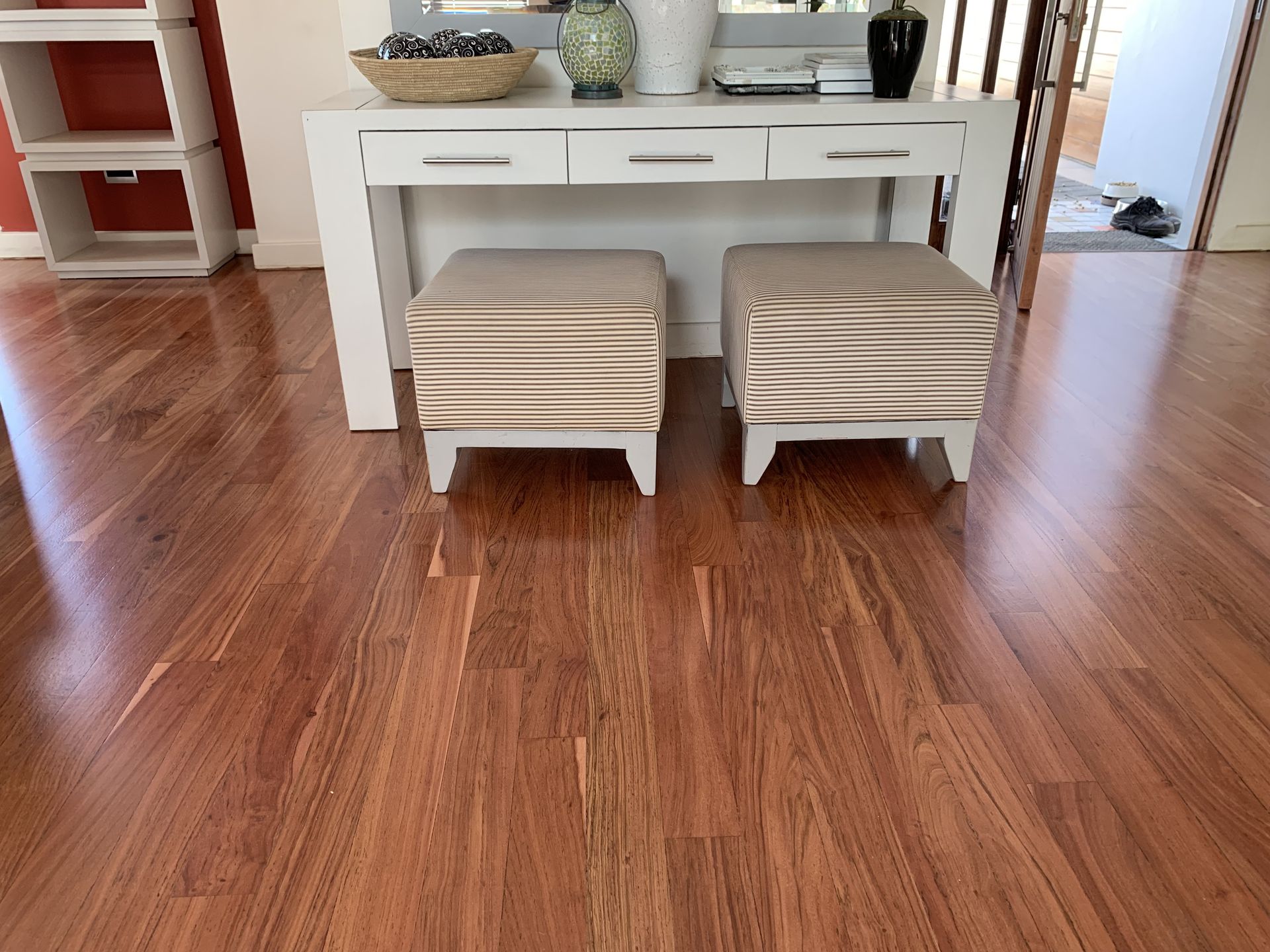
After installation is finished, the observable changes are specific: the surface is flat and continuous with no visible lippage between adjacent pieces, there's no movement or flex underfoot in areas that previously showed soft spots, and transitions between rooms or flooring types are seated correctly without raised edges. For repair work, the repaired section integrates with the surrounding floor without a visible boundary at normal viewing angles—an indicator of proper material matching and subfloor correction rather than surface-level fill.
Direct crew involvement throughout the installation is how Whitmer Construction maintains consistent quality across the full floor area rather than just in sections closest to entrances or most visible from the main traffic path. Projects that include subfloor remediation are scoped in sequence—structural prep is completed and inspected before finish material installation begins—so the final surface isn't compromised by work that should have been addressed in the prior phase.
What Homeowners Ask Before Flooring Work Begins
These questions reflect the practical concerns homeowners in Crisp and Dooly counties raise most often when planning a flooring project on an existing home.
How does Whitmer Construction inspect the subfloor before installation?
The on-site assessment includes checking for deflection across the joist span, identifying moisture-damaged panel sections, and measuring surface flatness to determine whether leveling compound or structural repair is required before the finish floor goes down.
What flooring materials perform best under south-central Georgia humidity conditions?
Materials with lower moisture sensitivity—such as luxury vinyl plank or ceramic tile—tolerate the humidity swings in Cordele more predictably than solid hardwood, though each has specific subfloor requirements that affect suitability for a given space.
Why do floors develop soft spots in older homes?
Soft spots typically indicate subfloor panel deterioration from long-term moisture exposure or joist deflection beneath the affected area—they don't resolve by installing new surface flooring over them, which is why subfloor inspection is a necessary step before any new material goes down.
When should flooring be repaired versus fully replaced?
Repairs are appropriate when damage is isolated and the surrounding material is structurally sound and closely matchable; full replacement becomes the better option when widespread subfloor compromise is found, when the existing material is discontinued and unmatchable, or when repair costs approach replacement costs over the affected area.
How does material acclimation affect flooring installation in this region?
Wood-based flooring products should acclimate to the home's indoor humidity conditions for a manufacturer-specified period before installation—skipping this step in a high-humidity environment like Cordele results in post-installation expansion that causes buckling or joint separation.
Whitmer Construction LLC approaches every flooring project with an inspection-first process that determines what the subfloor actually requires before any installation decisions are made—call (229) 417-9858 to set up a site visit and get a detailed assessment of your flooring project.