Drywall Work That Starts With What's Behind the Wall
Drywall Repair and Installation in Cordele for damaged panels, failed patches, and new wall construction in residential and commercial spaces
South-central Georgia's persistent humidity creates a specific drywall failure pattern that contractors in this region see repeatedly: a patch that looks fine at installation begins bubbling or cracking within months because moisture in the wall cavity was never identified before the repair was made. Whitmer Construction LLC handles drywall repair and installation across Crisp County, Dooly County, and surrounding areas with an owner-directed assessment process that looks at underlying conditions—moisture presence, framing integrity, and settling behavior—before any remediation work begins. That inspection step is what separates a repair that holds from one that gets repeated.
The work covers both repair patches on damaged sections and full wall installation for new construction or renovation projects. Local building codes in Cordele-area municipalities vary by jurisdiction, and those differences affect thickness requirements, fire-rating specifications, and fastener patterns in certain applications. Whitmer Construction builds code compliance review into the estimate process so that the installation approach matches the regulatory requirements for the specific project location, not just general regional standards.
Set up an on-site assessment to have the damage and underlying conditions evaluated before a repair scope is finalized.
The Difference Between Surface Repair and Structural Correction
Drywall repair involves more decision points than the surface damage suggests. A visible crack along a seam can indicate normal settling, framing movement, or a recurring moisture cycle—each of those causes requires a different response before the panel is patched. The assessment phase at Whitmer Construction looks at the perimeter of the damage, checks adjacent framing for movement or deflection, and inspects for moisture indicators before determining whether the repair is a panel replacement, a compound and tape correction, or a substrate-level intervention. Applying finish compound over an active moisture problem produces a result that fails within a season.
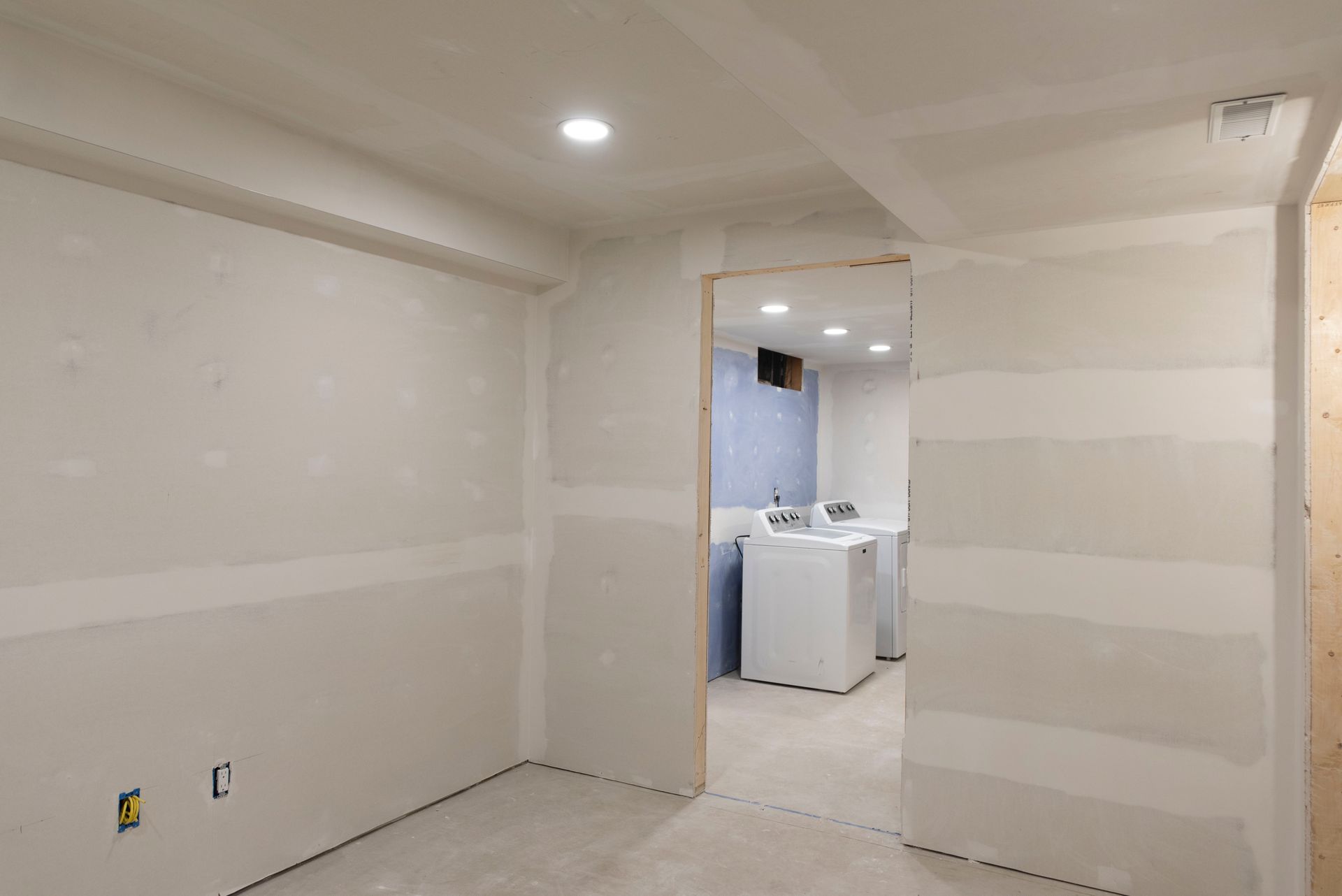
After installation or repair is complete, the wall surface reads as continuous—no visible seams at tape lines, no ridging at patch edges, and texture that matches the surrounding area closely enough that the repair boundary isn't obvious under normal lighting. For full wall installations, the finished surface is flat and ready for paint without high spots, fastener pops, or banding at butt joints, which are the three most common finishing failures on new drywall when compound application is rushed.
Scope considerations on drywall projects often extend beyond the panel itself. When underlying framing is found to have deflected or moisture-damaged blocking is present, those conditions are included in the project assessment so the estimate reflects actual repair requirements. Work that's scoped without that inspection tends to expand unexpectedly once the damaged panel is removed and the wall cavity is visible.
Questions Before Starting Your Drywall Project
Property owners in Crisp and Dooly counties typically have questions about what the repair process involves and how humidity-related conditions in this climate affect drywall performance over time.
How does Whitmer Construction assess drywall damage before starting work?
The owner inspects the damaged area and surrounding wall section for moisture indicators, framing movement, and settling patterns that would affect the repair approach—visible surface damage is the starting point, not the complete picture.
Why do drywall repairs sometimes fail within months of completion?
Repairs made without identifying an active moisture source or framing instability behind the panel will fail as those conditions continue to affect the new material—surface patching over an unresolved cause produces a temporary result.
What drywall thickness and type are required for different applications?
Standard residential walls typically use half-inch panels, while ceilings, moisture-exposed areas like bathrooms, and fire-rated assemblies require specific panel types; Cordele-area building codes specify these requirements by application and jurisdiction, which is why code review is part of the estimate process.
When should drywall be replaced rather than patched?
Panels with extensive moisture saturation, significant structural damage, or damage covering more than roughly a third of a wall section are generally better candidates for panel replacement than compound repair, which is a judgment call made during the on-site assessment.
How does temperature and humidity in south-central Georgia affect drywall installation quality?
Compound applied in high-humidity conditions dries more slowly and is more prone to shrinkage cracking as conditions change—experienced contractors in this region account for ambient conditions when scheduling finishing work and selecting compound formulations.
Whitmer Construction LLC handles the full scope of drywall work from initial damage assessment through finished surface preparation—call (229) 417-9858 to schedule a project review and get a clear picture of what the repair or installation will involve.